Time to Reimagine: Our Second Imaginal Studio in Bali, Indonesia
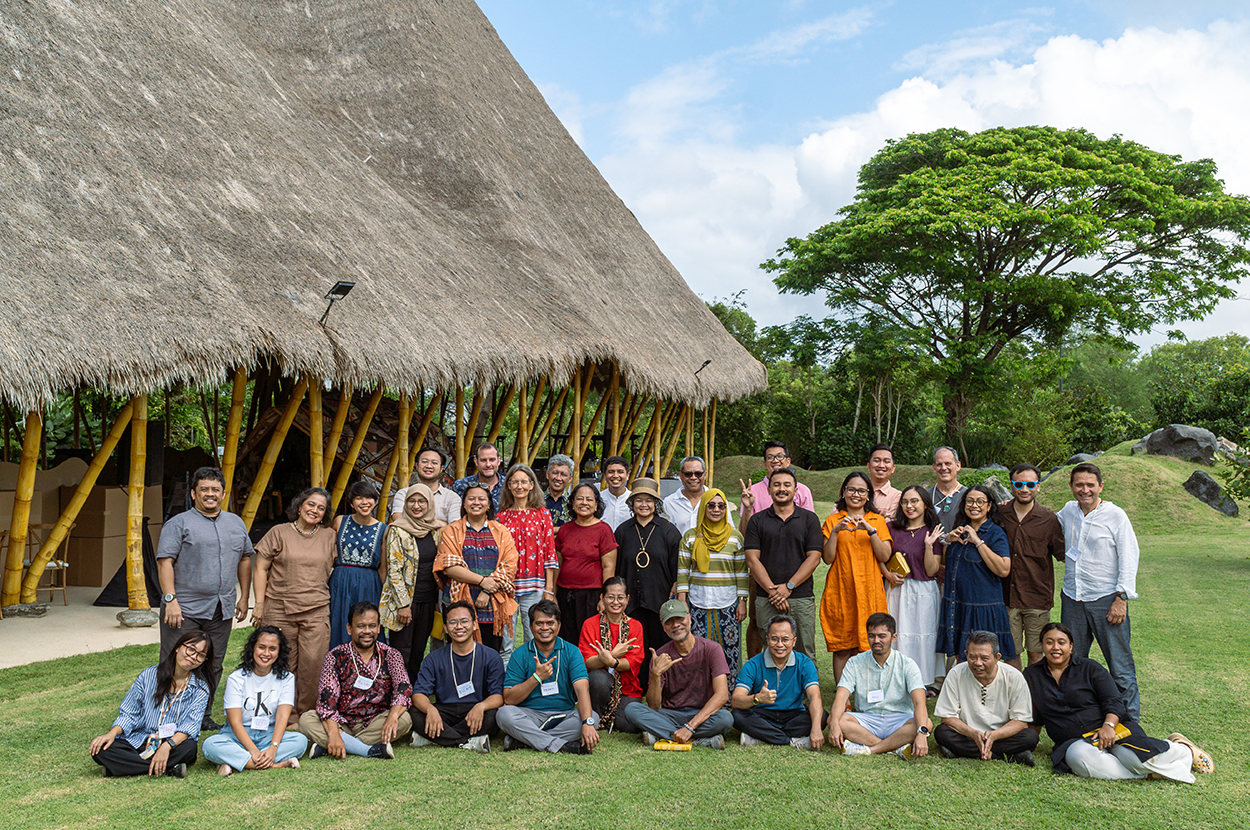
Photo credit: Dicky Bisinglasi
The birds were chirping high up in the beautiful open bamboo structure that would serve as our abode for our three days together at our Imaginal Studio in Bali — as we set out to envision a different future for food value chains, in Indonesia, and beyond.
We were all welcomed in the Balinese tradition with a blessing for our deepest aspirations, and a sharing of the philosophy of Tri Hita Karana: harmony with each other, harmony with nature, and harmony with the divine. This philosophy resonates deeply with Ostara’s core values and intentions, and the objectives we set for this Imaginal Studio: to shape a new collective vision and narrative for agricultural value chains and landscapes that can deliver biodiversity, equity and resilience; and to identify and chart pathways to prototype and scale transformative solutions that can deliver resilient and sustainable landscapes.
Participants shared their intentions and collectively mapped out the history of the future, a timeline of the forces that have shaped Indonesia’s food value chains to what they are today.
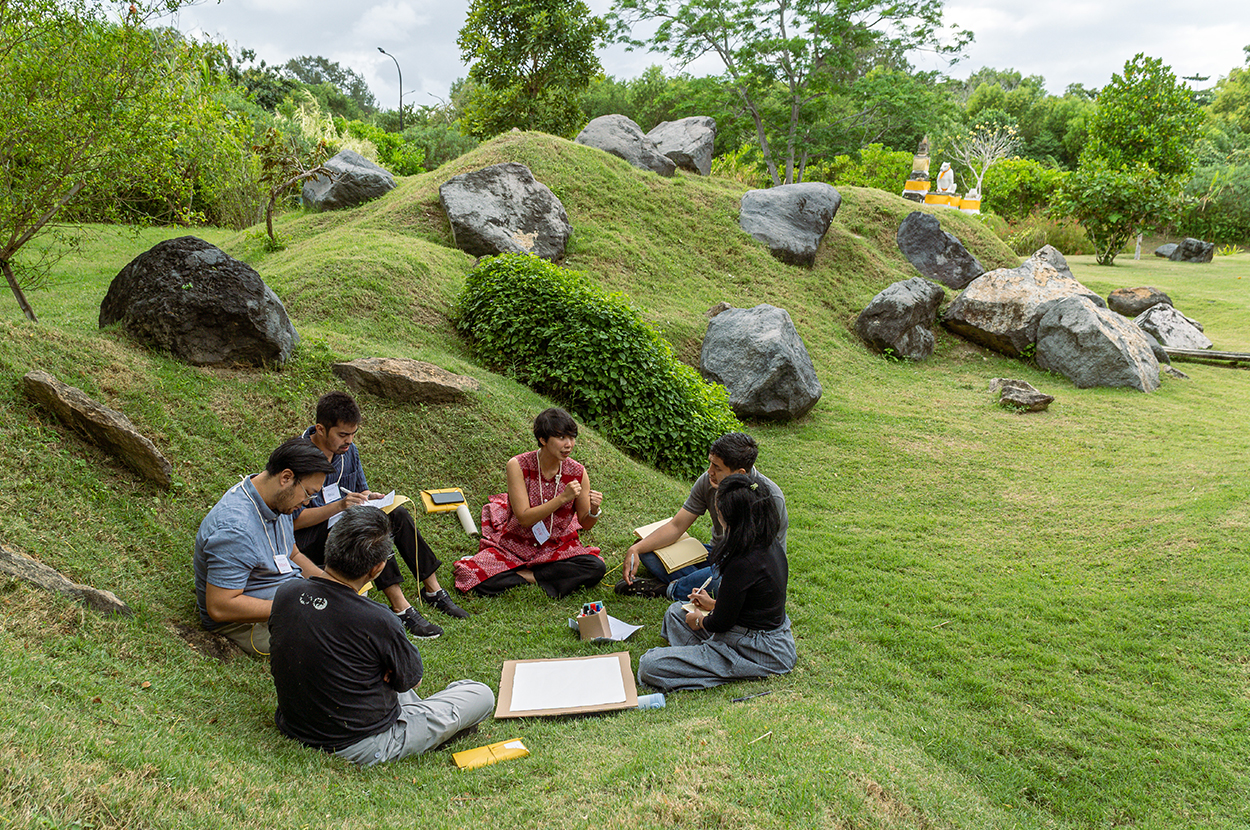
As in our first Imaginal Studio in the UK, we then took a deep dive into the cracks in the system, highlighted in our Reimagining Food Value Chains report. But this time, we connected them to personal leadership challenges experienced by participants and used the generative power of deep listening in small groups to reflect and advise on potential pathways forward.
Divergences were surfaced and embraced: should we prioritize short-term benefits or focus on long-term outcomes? Is the primary objective clean supply chains or is it landscape impact? Regenerative agriculture, or sustainable intensification? Should we push for bold new ideas or focus our efforts on incremental change? Who will drive the transition: policy, business, or grassroots organizations?
We drew on the Berkana Two Loop model, and the need to hospice the parts of the existing system that no longer serve us, while connecting, resourcing and illuminating the pioneering new initiatives that are emerging. Participants sat in pairs, and reflected on the thought-provoking questions that most resonated with them, such as:
- Could finance become a relational infrastructure that supports stewardship, reciprocity, and resilience — rather than short-term extraction?
- What examples exist of shared governance, democratic decision-making, or producer-led coalitions that redistribute power?
- How can food systems be grounded in the unique ecologies, cultures, and relationships of a place, alongside economic productivity?
The breeze brought us the smell of the ocean, as the sun slowly set upon our musings.
On the second day, using the tools offered by the Presencing Institute, we held space for a deeper dive into participants’ personal intentions and agency, connecting to the highest future potential for resilient food value chains. We used social presencing theatre to reveal deeper truths and gain more clarity on our individual and collective journeys.
The Subak system — an ancestral community-based practice of Tri Hita Karana used to irrigate paddy fields in Bali — was chosen as a case to illustrate the systemic challenges and opportunities for regenerative food systems. Subak is a seed of the emerging future. And yet, Subak is dying. Here in Bali, as in so many places across the world, farmers who still practice the ancient ways are struggling to make ends meet, while their children turn away from the rice paddies to find more lucrative employment opportunities in tourism. What will it take to turn the tide? Could more regenerative tourism become a force to revive Subak, and restore pride in the ancestral ways, instead of contributing to a continued cultural and ecological erosion of this most beautiful of islands?
Darkness settled in on the second day, the bats made their appearance over our heads, and we left contemplating the deeper truths that our explorations had surfaced.
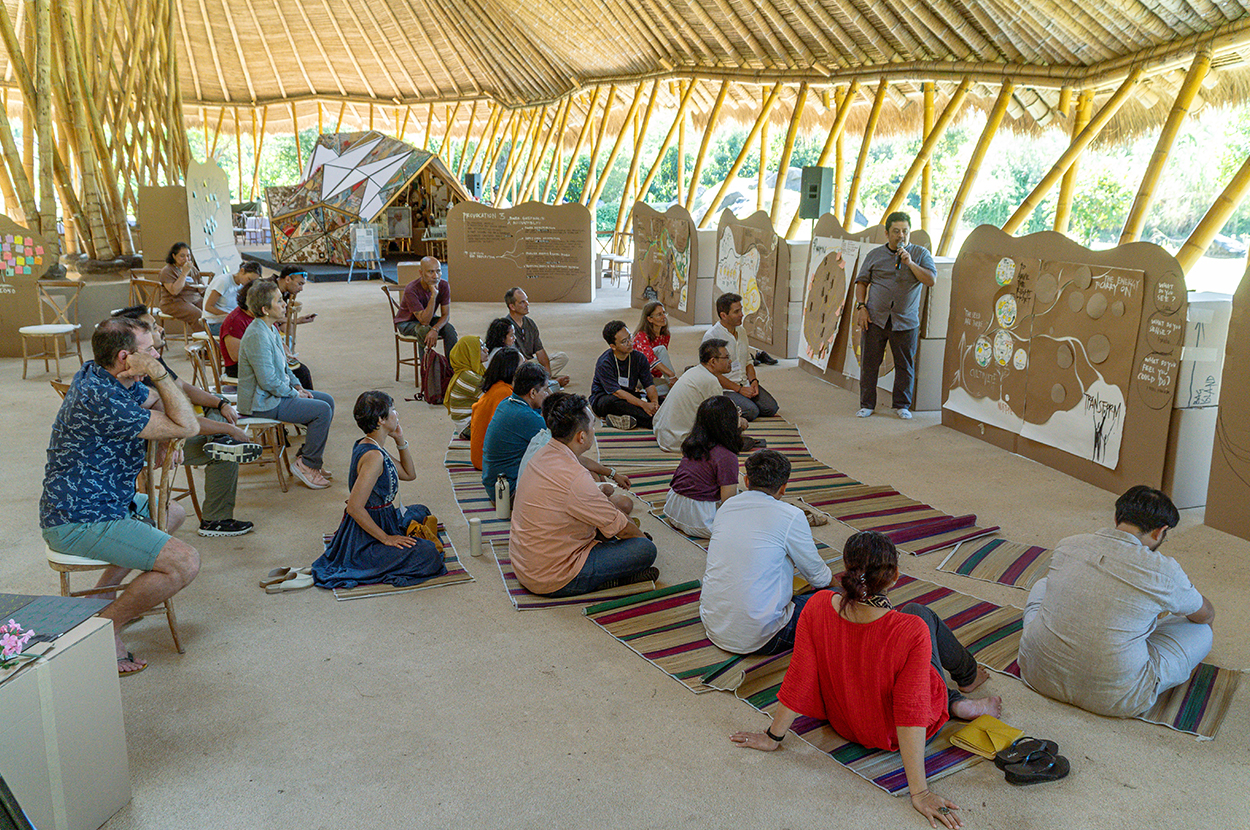
On the third day, born from the fertile soil of our collective journey, the emerging future started to crystallise:
- Could social forestry serve as an entry point for improving farmer welfare through sustainable agriculture, ecosystem restoration, and equitable value chains?
- Could we create and scale a “social foodscape” that links local food biodiversity, education, and community nutrition, whereby school food gardens, traditional knowledge, and food literacy are integrated into educational curricula, and farmers become cultural icons?
- What if our most limiting assumptions were internal, inherited, or invisible? What if we could scale investment into regenerative business models rooted in real landscapes, and aim to contribute trillions in regenerative food systems over time for Indonesia, through venture building, landscape finance integration and cooperative value chains?
- Could we recalibrate food system consciousness, and find a middle path between industrial centralisation and idealised decentralisation?
These emergent pathways will need further conversations and explorations, as the group follows their collective agency in the weeks and months to come.
We left with a commitment to continue weaving a shared narrative for the transition, that is rooted in place and practice. And a growing sense of belonging to a nascent community dedicated to restoring an economy in service of life.
Learn more about the Imaginal Studio in Bali:
Throughout the Imaginal Studio we practiced the social arts to bring the invisible into awareness for collective sensing and learning. We invite you to watch the following video following the journey of our conversations over the four days.
Generative scribing by Indra Zaka Permana created during the Imaginal Studio, Bali, 31 July – 2 August 2025.