Time to Reimagine: Our Third Imaginal Studio in Brazil
It Starts with Place
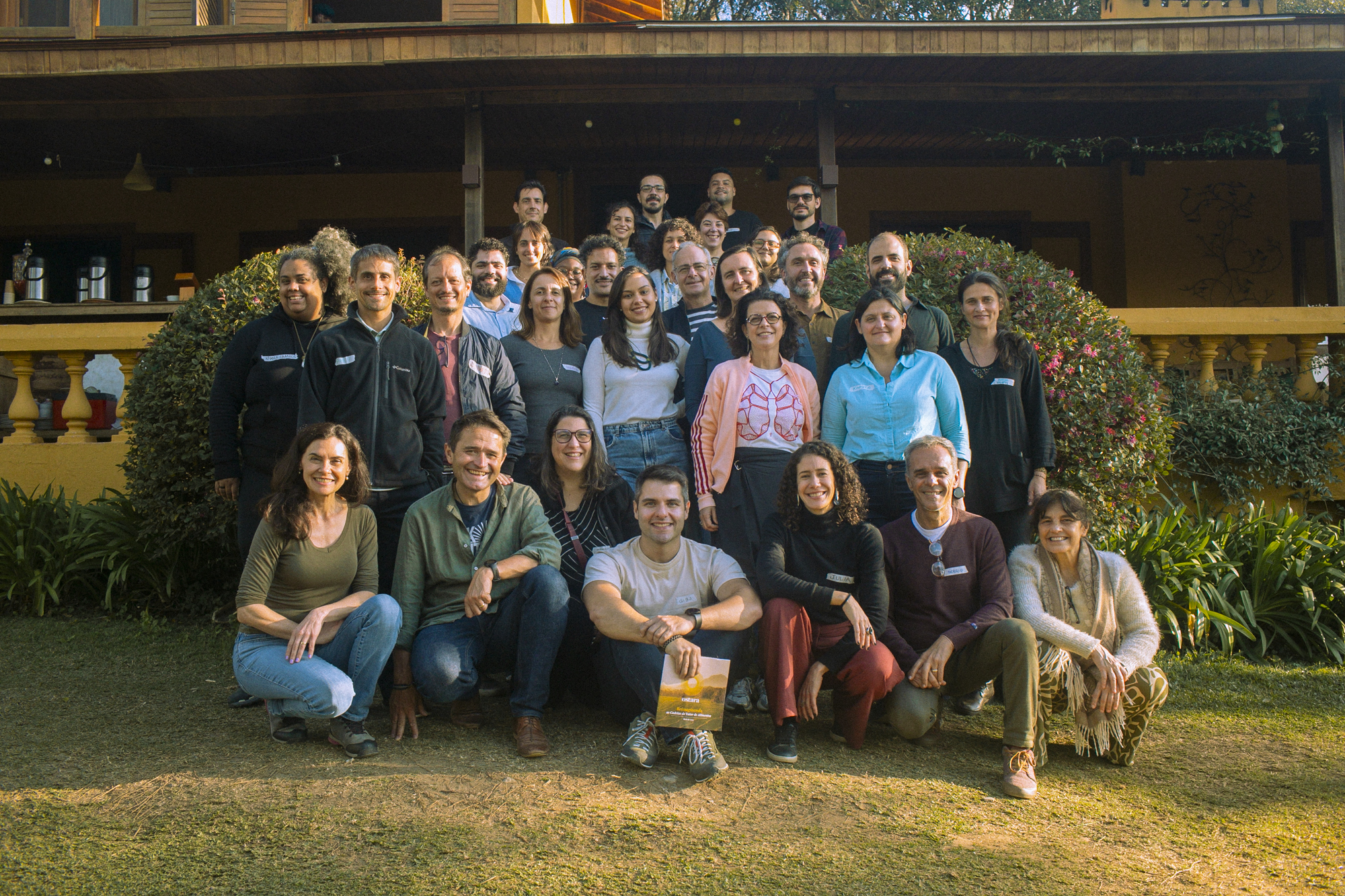
In August, 28 leaders from across a spectrum of food systems organisations, gathered in Ibíuna, São Paulo for our Imaginal Studio in Brazil to explore their individual and collective roles in transforming food systems. This was the third in a series of encounters to reimagine food value chains from the ground up.
Ibíuna was once an important centre for organic food production, servicing much of nearby greater São Paulo’s 20 million plus inhabitants. The Studio itself took place at the Fazenda Morros Verdes Ecolodge, a hotel built on once-degraded land, restored through agroforestry plantations and serving as a living example of how land can be recovered and made productive in a sustainable way.
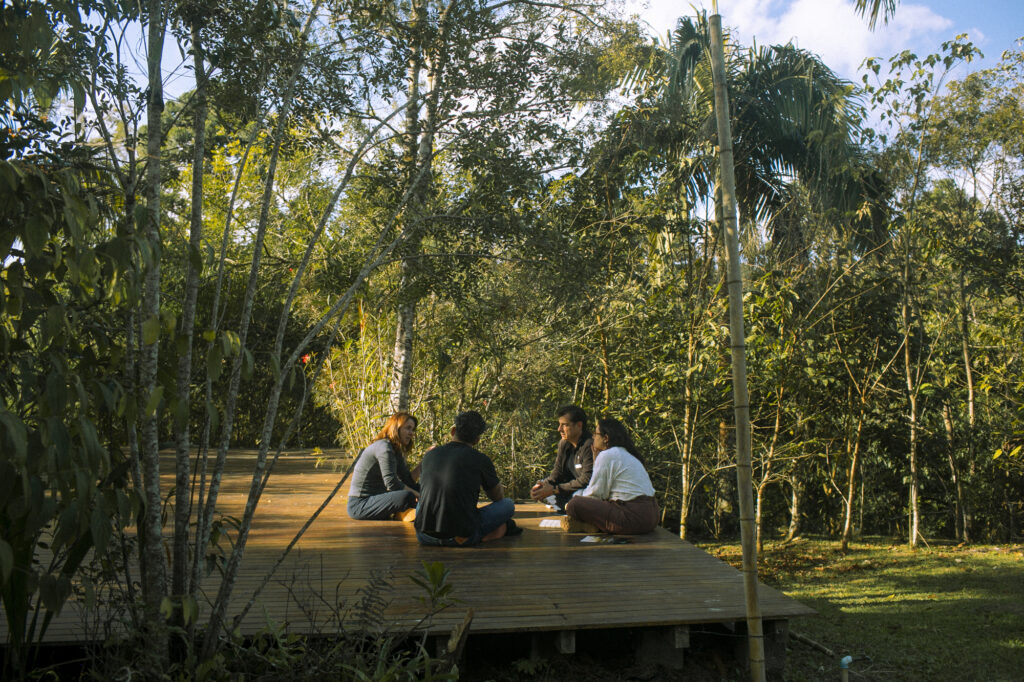
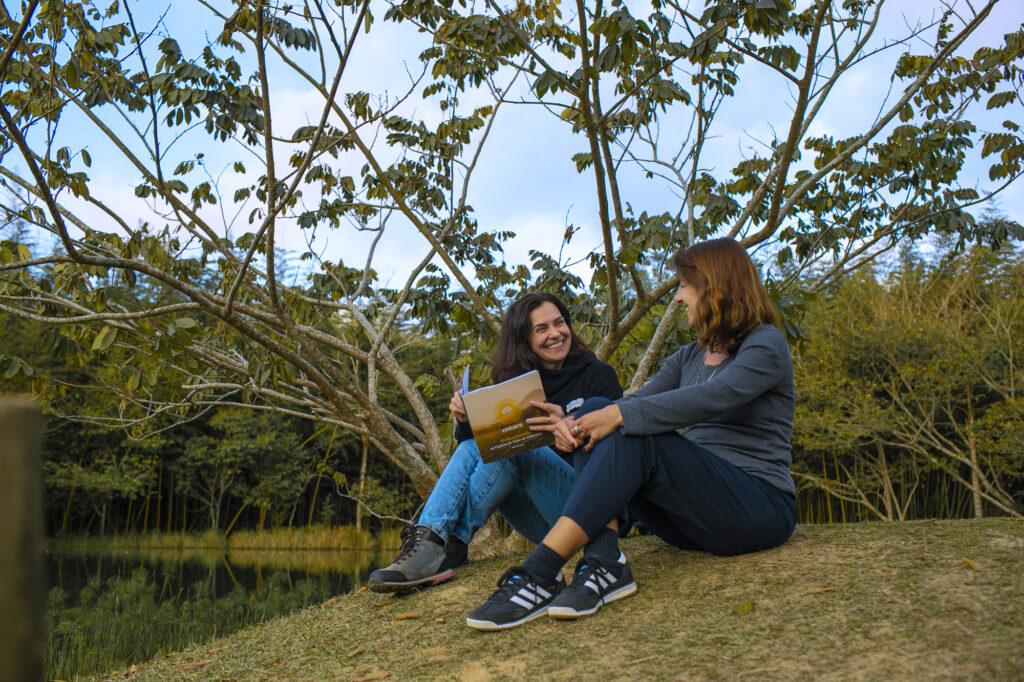
Participants were given a guided tour of the agroforestry plots, which weave together native trees, fruit-bearing species, shade-grown plants, and forest understory in a living tapestry of restoration. Walking its paths, one is both grounded in the legacy of Ibiúna’s organic past and invited into a future where degraded land can become fertile again — both for soil and for imagination.
The Shape of Things to Come
Our Imaginal Studios invite participants to step away from their busy working lives and into an imaginal space, where food systems can be reimagined and reinvented. With facilitation from Olab and Ostara, the questions that guided this collective exploration included:
- What stories have shaped our current food systems?
- What are the positive aspects (‘the light’) and what are the challenges (‘the shadow’) that define where we are today?
- What futures for food can we imagine together?
- How do we move from vision to action?
Mapping the history of food systems in Brazil proved to be a cathartic exercise: some of the country’s oldest agronomy universities date back to the 19th Century, and continue to play an important role in shaping how we think about food production and consumption. At the same time, the boom and bust cycles of commodities — from the eponymous Brazilwood through sugar and coffee and on to soy and beef — continue to be important markers of the country’s food and economic systems.
There is an important pride in Brazil’s capacity to produce food, both for national consumption and as the breadbasket of the world. At the same time, the country’s food system has the potential to evolve hand-in-hand with the conservation and growth of its biodiversity and natural resources, a vision that participants called the ‘new green revolution’, mirroring the earlier agriculture-focussed green revolution that took place in the 1970s.
The Berkana Institute’s Two Loops model was instructive in thinking about transformation, and was renamed the ‘Bacana Loops’ by Brazilian participants, ‘bacana’ meaning cool or funky. Participants were invited to form small ‘composter’ groups, where they could explore what needed to be ‘let go’, so that the new can emerge.
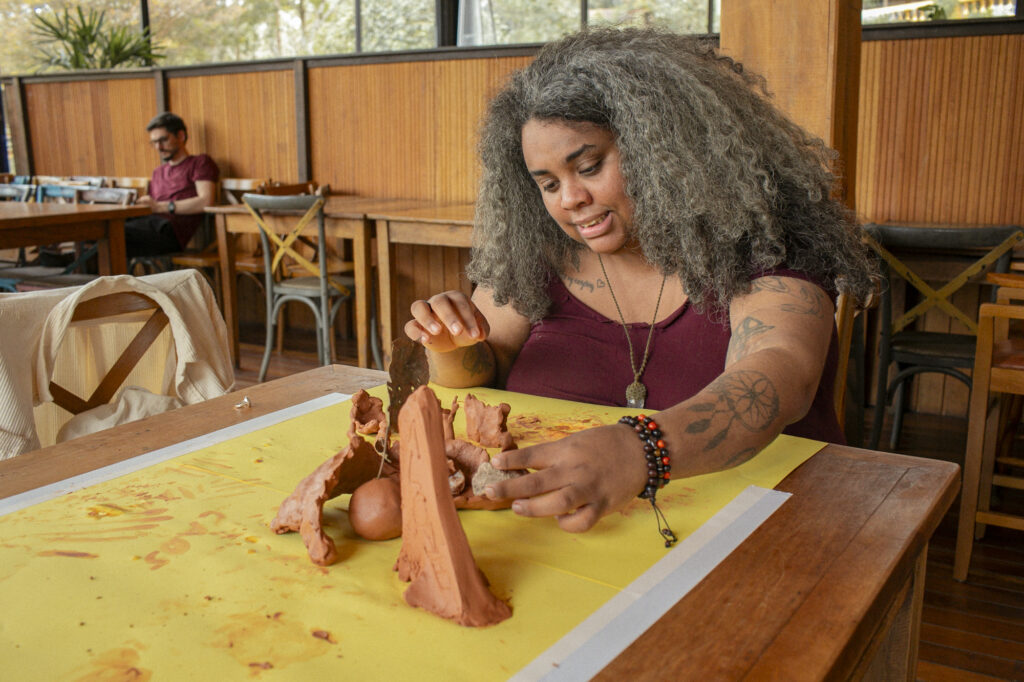
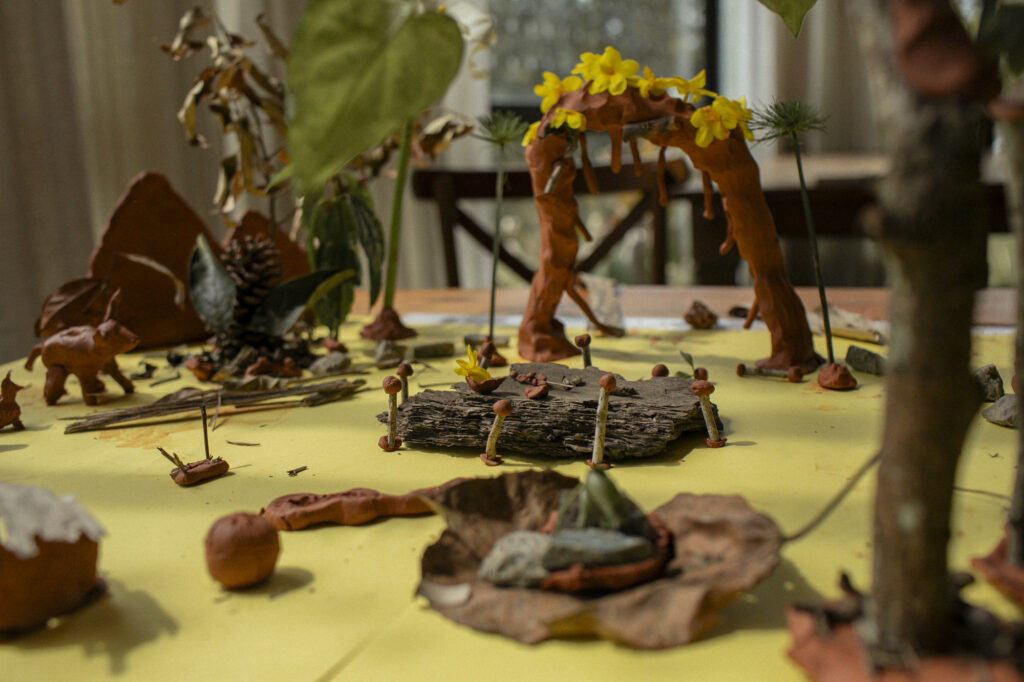
The four days allowed time for deeper immersion in nature, for in-depth discussions in pairs and smaller groups, and for moments in which the creative was prioritised over the intellectual. Working with clay to collectively mould a common future for Brazilian food systems proved an important gateway: futures appeared as gardens, as communities and as circular flows of nourishment, while the darker sides of food systems also became manifest. We saw that imagination is not a luxury but a necessity. Without it, systems remain locked in their current trajectories. With it, new pathways can be opened.
Seeds of Renewal
By the end of day three, participants were beginning to carve out, share and develop specific “seeds”: projects that could shape the future of food systems in Brazil. These included:
- Empowering local producers through recognition and support of sustainable practices, combining technical assistance with collaborative storytelling and connections to larger networks.
- Public policy reform, advocating for equitable land access, agroecological transitions, and investment in regional food systems to ensure resilience and fair distribution.
- Landscape interventions, including enhancing dialogue between municipalities, improving access to finance for family farmers, and integrating local knowledge into public policies, as well as transforming degraded land into productive agroforestry systems.
- Projects centred on culture and narratives, leveraging art, education, and media to reconnect people with local food, ecological knowledge, and collective responsibility for sustainable practices.

Beyond Food to Culture
The centrality of culture in shaping food systems was a recurring theme. Food is more than nutrition: it carries the history, values, and identity of communities. How people grow, prepare, and share food reflects deeply held cultural practices, and respecting these traditions is essential for building resilient and equitable food systems. Culture provides a sense of pride and belonging, connecting individuals not only to their communities but also to the land that sustains them. Recognising this helps reinforce the idea that food systems are not abstract economic or environmental constructs — they are woven into people’s lives and identities.
The Imaginal Studio offered opportunities for participants to express culture in diverse forms. Music, dance, art, and even sports were part of the experience, allowing participants to tap into shared histories, emotions, and ways of knowing. By foregrounding culture, the retreat underscored that transforming food systems is as much about values, identity and relationships as it is about technology or policy. Culture becomes both a compass and a catalyst — guiding the development of food systems that are inclusive, resilient, and deeply rooted in the landscapes and histories of Brazil.
Participants departed the Imaginal Studio with a sense of hope and a dose of realism. The relationships forged are being sustained through informal engagements and a regular meet-up for those based in Brazil. And some of the seeds are already beginning to grow, as the conversations from Ibíuna turn into collaborations and actions in the real world. Brazil has such a critical role to play in feeding the world both now and in the future, and the Imaginal Studio reinforced the sense that a common vision, quality relationships and cultural respect are the key building blocks for reinforcing the country’s leadership in this space.
James Allen and Olab partnered with Ostara to design and facilitate the Brazil Imaginal Studio.