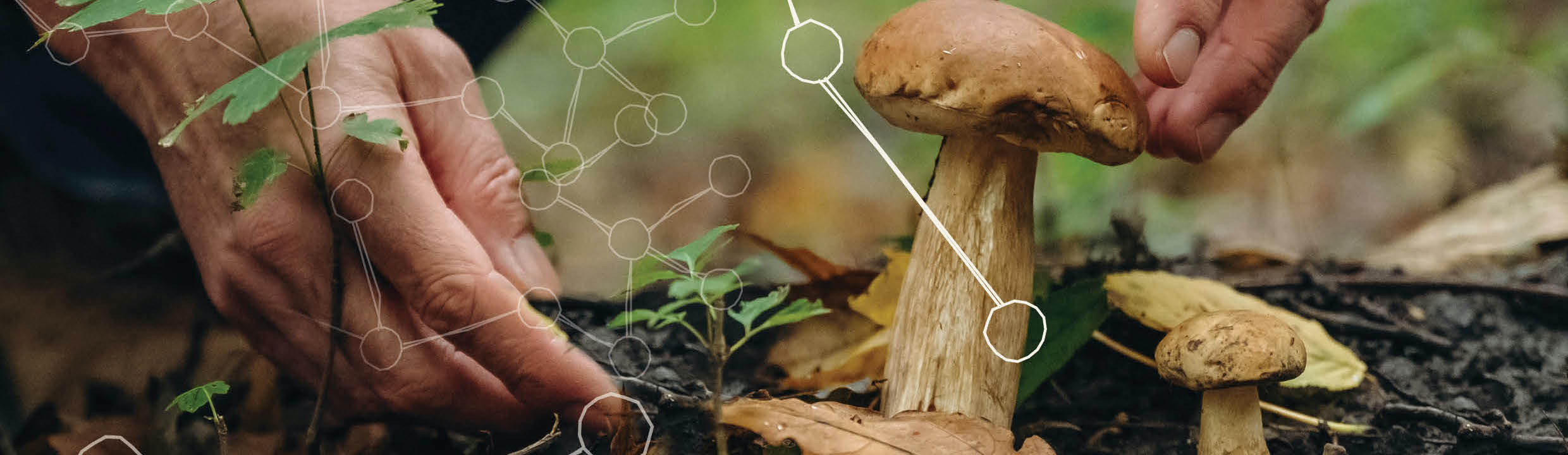
Reimagining Food Value Chains: Synthesis Report
Image credit: Ilmi Amali QA via Unsplash.
Over the past century, global food systems have helped feed a booming population, fuel economic growth, and reduce hunger in many parts of the world. These are not small achievements. The scale, consistency, and reach of today’s agricultural and fisheries systems are extraordinary: a result of ingenuity, coordination, and hard-won progress.
The system has delivered — for many. But for others, it has come at too great a cost.
The system is built to produce large volumes of cheap calories, and by that measure — volume and price — it still works, particularly for large producers, commodity traders, financial institutions, and consumers in high-income markets.
But the cracks are showing. Climate shocks are intensifying. Ecological and social costs are mounting. Trust between actors is fraying, and health outcomes are worsening, with diet-related diseases rising rapidly even as hunger persists.
Considerable progress has been made to address these growing challenges, but despite numerous initiatives to shift an unsustainable trajectory, we remain stuck in a pattern of incrementalism. Too often, the dominant logic of the system curtails our imagination. Even those pushing for change often end up reworking the same tools, responding to the same incentives, and operating within the same mental models prioritising efficiency and growth, without questioning the system’s underlying foundations, nor the ways in which it limits our imagination of what else might be possible.
At the same time, a new horizon is emerging. Across geographies, communities are experimenting with radically different ways of organising, producing, and relating to food and land. These efforts often remain fragmented or under-resourced, because they don’t fit within the logic of the current system. Yet they hold great potential as we reimagine a system that can continue to deliver at scale and simultaneously operate on new foundations that prioritise people and planet.
Our Invitation
Against this backdrop, with the support of the Gordon and Betty Moore Foundation, Ostara launched a vital exploration of how global food value chains can better support equity, resilience, and biodiversity.
Between February and April 2025, we interviewed over 50 diverse global actors working across the agri-food value chain, and asked the following questions: What if we pushed the boundaries of possibility to reimagine agricultural and fisheries value chains so that they deliver for people
and the planet? What keeps us stuck? And what feels too bold, risky, or radical, yet may hold the key to real transformation?
The interviews reflected a spectrum of perspectives. Some interviewees spoke of the success of the existing model, highlighting its productivity, scale, and efficiency. Others expressed unease, pointing to structural fragilities, inequities, blind spots and mounting externalities. Some
saw incremental reform as essential. Others believed that a deeper transformation is needed: one that reimagines finance, ownership, and the story we tell about value.
This month, we released ‘Reimagining Food Value Chains’ — a synthesis report presenting the inspiration we gained from these conversations. Its purpose is not to provide a comprehensive analysis of the system and its existing challenges. Rather, it aims to highlight fundamental cracks in the system, surface areas of paradox and conflicting viewpoints, offer examples of promising solutions, and invite a deeper exploration of key provocations we believe could hold the biggest potential for systems transformation.
The provocations laid out will be the starting point for a series of workshops — called Imaginal Studios — which we will be hosting over the coming months to gather more insights and understanding as we attempt to identify transformational opportunities.
We invite you to pause, listen, and embrace the paradoxes.
Join us on a journey of exploration into what becomes possible when we allow our imagination to break free from logic that keeps us stuck, and make space for collective dreaming of new pathways. Together, we hope to foster the emergence of innovative strategies, approaches, and solutions that can move us beyond the current extractive paradigm, and shape a new collective narrative for food value chains.